

Key Takeaways
- For many adults, a professional cleaning every six months is a good starting point.
- The right interval depends on your gum health, medical history and risk of cavities, so some patients benefit from more frequent visits.
- Professional cleanings remove calculus, the hardened buildup also called tartar, which brushing and flossing cannot remove.
- Gum disease, diabetes, tobacco use, dry mouth and braces can all call for a shorter interval.
- Children can have a first visit by age one, and Highland Dental offers one free happy visit for children under three.
- Contact the clinic if you have pain, swelling or a chipped tooth between visits.
Brushing and flossing twice a day remove most of the plaque that builds up on your teeth, but they cannot remove everything. Plaque that stays in place hardens into calculus, which only professional instruments can remove.
At Highland Dental in Crossfield, our team will help you decide how often a cleaning makes sense for you.
For many adults, a professional cleaning every six months is a good starting point, and your dentist or hygienist will adjust that interval based on your gum health, medical history and risk of cavities.
Children can begin visiting by age one, and Highland Dental offers a free happy visit for children under three.
How Often Do Most People Need a Cleaning?
Canadian Dental Association guidance says the right frequency of dental visits depends on each person’s needs and risk of oral disease, and that for most people it is every six months. Your dentist or hygienist may recommend a different interval after assessing your risk.
Plaque is a sticky film of bacteria that forms on your teeth every day. When it is not fully removed, it hardens into calculus, also known as tartar. Once calculus forms, brushing and flossing cannot remove it. It is most common behind the lower front teeth and on the cheek side of the upper back teeth, near where saliva enters the mouth.
Calculus matters because its rough surface gives plaque a place to cling and holds bacteria against the gums, which can lead to inflammation and gum disease. A professional cleaning removes it, and regular visits also let your dental team check your gums, teeth, and the soft tissues of your mouth for early changes before they cause symptoms.
Why Some Patients Need More Frequent Cleanings
Your hygienist or dentist may suggest a shorter interval, for example every three to four months, when your risk of gum disease or cavities is higher.
Signs of Gum Disease to Watch For
Gum disease often develops without pain, so the early signs are easy to overlook. Gingivitis, the early stage, may cause these changes:
- Your gums bleed when you brush or floss.
- Your gums look red or swollen, or they feel tender.
- You have bad breath that does not go away.
Gingivitis can usually be reversed with good home care and professional cleanings. If it is not treated, it can progress to periodontitis, which affects the bone that supports your teeth.
Gum recession and loose teeth are signs of more advanced disease, so contact us promptly if you notice either of these signs.
Health Conditions & Daily Habits
Your overall health and daily routine also affect how often you should be seen. These factors can call for more frequent care:
- Diabetes, especially when blood sugar is not well controlled, increases the risk of gum disease.
- Smoking or chewing tobacco increases plaque and calculus buildup and makes it harder for your gums to heal.
- Dry mouth from some medications raises your cavity risk, because saliva helps wash away food and neutralize acids.
- Braces and other orthodontic appliances make it harder to remove plaque.
- A history of frequent cavities or gum disease.
Let our team know about any new medications or changes in your health at each visit, since they can affect your oral health.
Cleaning Schedules for Every Age in Your Family
Each member of your family may need a different schedule. Booking visits together can make it easier to keep everyone’s care on track.
Children & Teens
The Canadian Dental Association supports a child’s first dental visit by age one, or within six months of the first tooth coming in. Early visits let the dental team assess the risk of early childhood cavities, show parents how to clean small teeth and help children feel comfortable in the dental chair.
Highland Dental offers a free happy visit for children under three. It is a single, relaxed appointment where your child can meet our team and sit in the dental chair with no pressure.
Teens have their own needs. They take over more of their own care, and several common factors can raise their risk of cavities and gum problems. Regular cleanings let our team keep a close eye on:
- Braces and aligners: Orthodontic appliances make it harder to remove plaque, so teens with braces often need more frequent cleanings, along with careful brushing and flossing twice a day.
- Hormonal changes: Puberty can make the gums react more strongly to plaque, so teens may notice red, swollen or bleeding gums even when their routine has not changed.
- Sugary and acidic drinks: Pop, sports drinks and energy drinks can raise the risk of cavities and wear down enamel. Rinsing with water afterward helps.
- Sports: Ask our team about mouthguard options for contact sports.
- Wisdom teeth: In the late teen years, X-rays can show how wisdom teeth are developing and whether they may cause problems later.
- Tobacco and vaping: Our team can talk about tobacco and vaping privately and without judgment. Both can irritate the gums and affect oral health.
Our team also reviews brushing and flossing technique with teens at each visit, so they can take charge of their own care with confidence.

Adults & Seniors
Your needs change as you age. Gum recession, medications that cause dry mouth, and restorations such as crowns and fillings can all affect how closely your teeth and gums should be monitored.
If you wear dentures or have dental implants, you still need regular visits. Your team checks the fit of your dentures, the health of the tissue underneath them, and the gum and bone around your implants.
What Happens During a Professional Cleaning
Knowing what to expect can help you feel at ease in the chair. A typical cleaning appointment includes these steps:
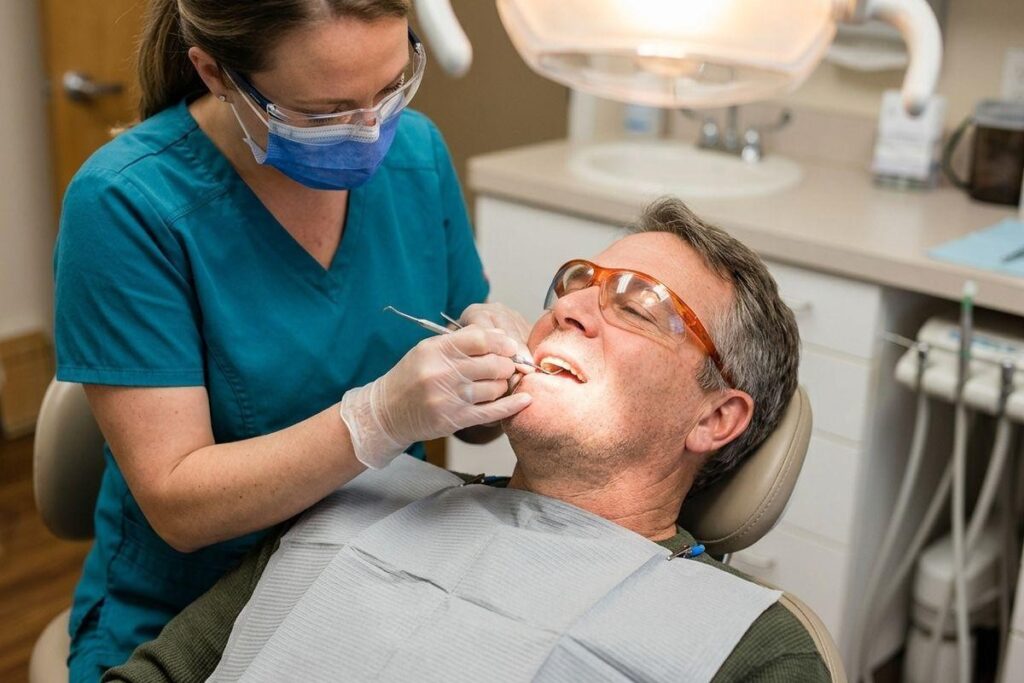
- Your hygienist reviews your medical history, asks about any changes in your health or medications, and checks your gums, teeth and the soft tissues of your mouth.
- Scaling removes plaque and calculus from your teeth, including below the gumline, using hand or ultrasonic instruments.
- Your teeth are polished to remove surface stain and flossed so they feel smooth.
- Your hygienist reviews home care techniques suited to your mouth and recommends when to book your next visit.
Some appointments will include a complete exam by the dentist, who can diagnose any problems and talk through your treatment options. Your care team will let you know when an exam is due, and it may be combined with your cleaning or scheduled separately.
Home Care Between Visits
Daily Care at Home
What you do at home matters as much as your cleaning. These daily habits help protect your teeth and gums between visits:
- Brush twice a day for two minutes with fluoride toothpaste.
- Floss twice a day to clean between your teeth, where your toothbrush cannot reach. If flossing is difficult, ask your hygienist about interdental brushes or water flossers.
- Limit sugary snacks and drinks, and rinse with water after coffee or sweet drinks.
Signs to Come In Early
Some problems should not wait for your next cleaning. Contact the clinic sooner if you notice any of these:
- Tooth pain, swelling or sensitivity that lingers.
- A chipped, cracked or loose tooth.
- Gums that keep bleeding despite regular brushing and flossing.
If you have tooth pain, swelling or a chipped tooth, contact the clinic rather than waiting for your next cleaning.
Book Your Next Visit at Highland Dental
For many adults, a cleaning every six months is a good starting point, and your dentist or hygienist can tailor that schedule to your gum health, medical history and risk of cavities.
Highland Dental in Crossfield welcomes families from Airdrie, Madden, and across Rocky View County. Request an appointment for your next checkup and cleaning, or ask about a free happy visit for a child under three.