
Key Takeaways
- Gum disease is inflammation and infection of the gums and the tissues that support your teeth, caused by bacteria in plaque.
- Gingivitis is the early stage, and it can usually be reversed with good daily care and professional cleanings.
- Red, swollen, or bleeding gums are early signs. Gum recession and loose teeth are signs of more advanced disease.
- Brushing twice a day, flossing twice a day and regular checkups help protect your gums.
- Contact Highland Dental in Crossfield if your gums keep bleeding or feel sore.
A little blood when you brush or floss is easy to brush off, but bleeding gums can be one of the first signs of gum disease. Our team at Highland Dental in Crossfield sees this often and can help you find the cause.
Gum disease often develops slowly and may cause little or no pain at first, so the early changes are easy to miss.
You can help manage gum disease early by watching for changes in your gums, brushing and flossing twice a day, and getting regular checkups.
Noticed a change in your gums? Request an appointment at Highland Dental, and our team will check your gums and recommend next steps.
What Gum Disease Is & Why It Matters
Gum disease is inflammation and infection of the gums and the tissues that support your teeth. It begins when plaque, the sticky film of bacteria on your teeth, builds up along and just below the gumline.
The early stage is called gingivitis, a mild inflammation of the gums. With good home care and professional cleanings, gingivitis can often be reversed. If plaque is not removed, it can harden into calculus (also called tartar), which holds bacteria against the gums.
Untreated gingivitis can progress to periodontitis, a more advanced stage in which the bone that supports your teeth is gradually lost. The damage from periodontitis is usually not reversible, which is why catching gum disease early matters.
Gum disease can affect anyone at any age, so it helps for the whole family to know what to look for.
Early Signs of Gum Disease to Watch For
Early signs can be subtle, and they may cause little or no pain. Some you can see in the mirror, and others you may notice when you chew or taste.
Changes You Can See
Take a close look at your gums in good light and watch for these signs:
- Your gums look red, puffy or swollen.
- Your gums bleed when you brush or floss.
Changes You Can Feel or Notice
Other early signs show up in how your mouth feels or tastes:
- Your gums feel tender or sore, especially when you chew.
- Bad breath or a bad taste sticks around, even after you brush.
Signs of More Advanced Gum Disease
Some signs suggest the disease has progressed beyond gingivitis. Contact the clinic promptly if you notice any of these:
- Your gums pull back, which makes your teeth look longer.
- A tooth feels loose or seems to shift.
- You see pus around your gums, or your teeth no longer fit together the way they used to when you bite.
What Raises Your Risk of Gum Disease
Several factors make gum disease more likely, and knowing them can help you plan ahead. Some of the most common are:
- Plaque that is not removed well, from skipped brushing, flossing or regular checkups.
- Smoking or using chewing tobacco.
- Diabetes, especially when blood sugar is not well controlled.
- Dry mouth from some medications, which is more common as we age.
- Hormonal changes, such as those during pregnancy.
- A family history of gum disease.
If you take daily medications and your mouth often feels dry, mention it at your next visit. Our team can suggest ways to manage it.
Simple Steps to Manage Gum Disease Early
Small habits add up. A few minutes a day can make a real difference for your gums.
Daily Habits at Home
These three habits help keep your gums healthy:
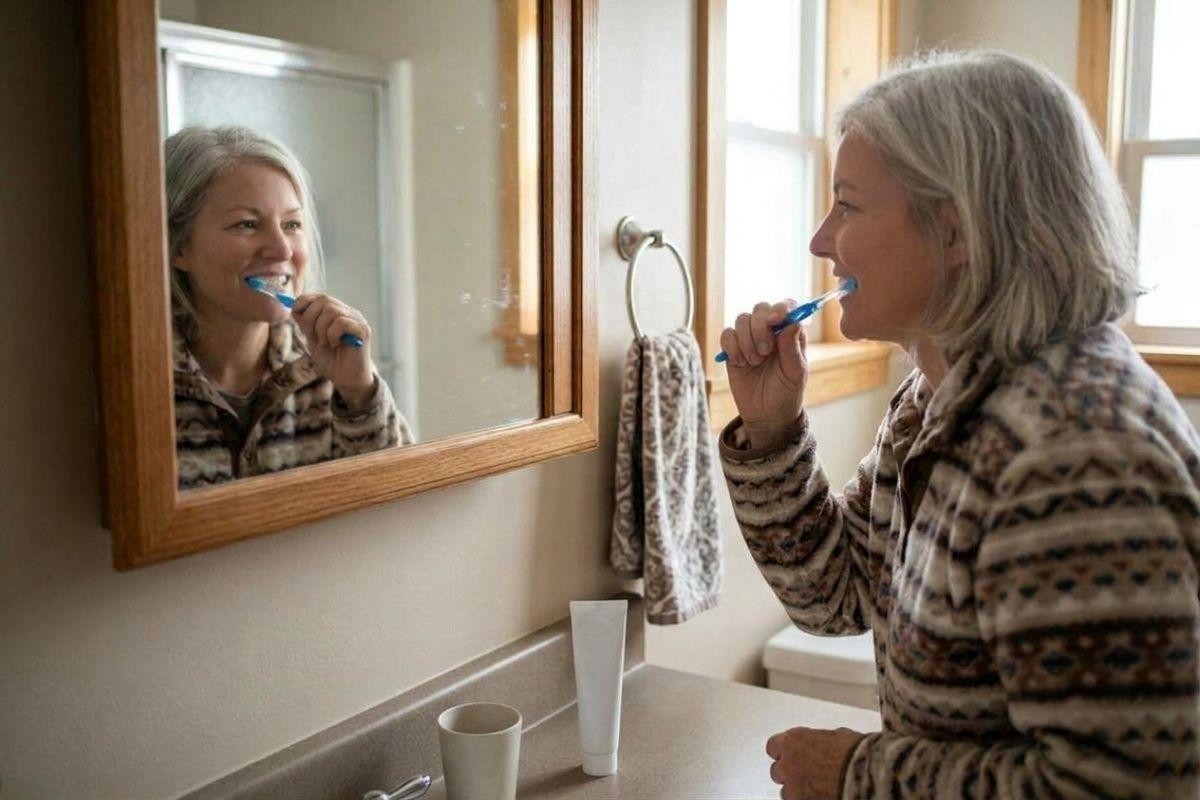
- Brush twice a day for two minutes with fluoride toothpaste, using a soft-bristled brush and gentle strokes along the gumline.
- Floss twice a day, or use interdental brushes or soft picks, to clean between your teeth where plaque collects.
- Limit sugary snacks and drink water throughout the day.
If two minutes feels long, use a timer or an electric toothbrush with a built-in timer.
Tools That Make Brushing & Flossing Easier
The right tools can make daily care easier for everyone in the family, from young children learning to brush to adults with stiff joints or limited hand strength. These options can help:
- Electric toothbrushes and toothbrushes with wide, easy-grip handles are simpler to hold and control. Many electric models also have built-in timers to help everyone brush for the full two minutes.
- Floss holders, interdental brushes and soft picks are often easier to use than traditional floss, especially for small hands or sore fingers.
- A water flosser can help clean between teeth, including around braces.
- Child-sized toothbrushes and floss picks can make it easier for children to brush and floss twice a day.
Young children need help brushing until they can do it well on their own. Your hygienist can show you and your child which tools and techniques work best.
Gum Disease Questions & When to Get Help
It can be hard to know when a change is worth a visit. Here is what to watch for and what to expect.
Signs It’s Time for a Visit
Book a visit or contact the clinic if you notice any of these:
- Your gums keep bleeding, or the bleeding gets worse.
- You have swelling, pain or a tooth that feels loose.
- Bad breath persists despite regular brushing and flossing.
- Your gums look different than usual.
How We Check Your Gum Health
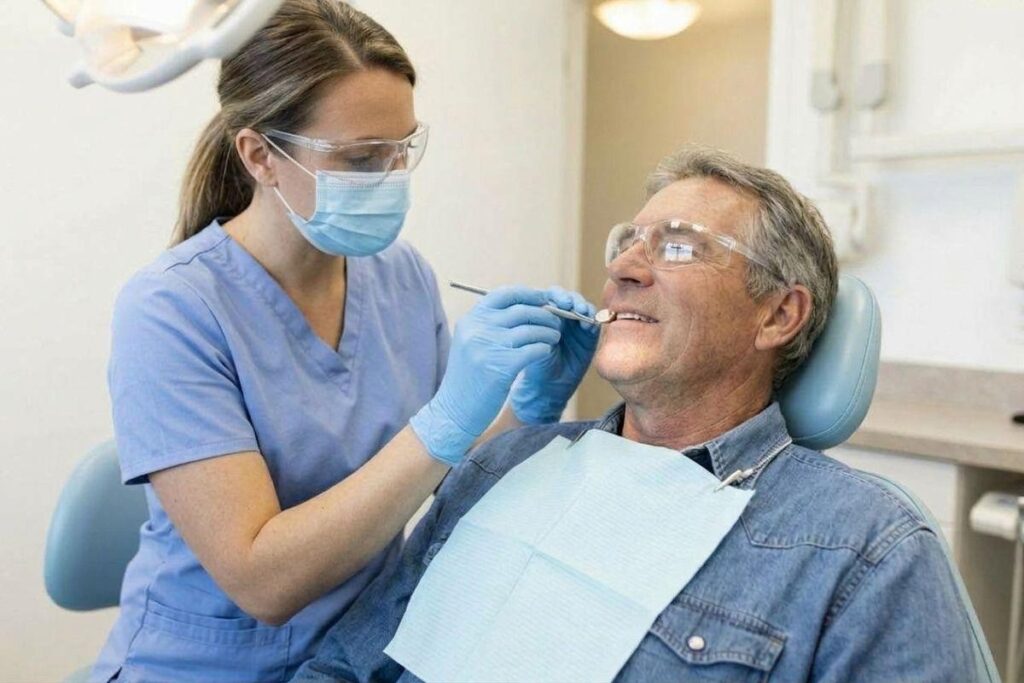
Your gums are assessed as part of your regular cleaning visits. When we check your gum health, our team will:
- Gently measure the small spaces, called pockets, between your gums and teeth with a thin probe. Shallow pockets are a sign of healthy gums, and deeper pockets can point to gum disease.
- Look for redness, swelling, bleeding and gum recession, and note any changes since your last visit.
- Take X-rays when needed to show the bone that supports your teeth.
- Remove plaque and calculus (hardened plaque, also called tartar) from above and below the gumline during your cleaning.
Afterward, your care team reviews what they found and recommends a plan. It may include more frequent cleanings, a deeper cleaning below the gumline, or a referral to a periodontist (a gum specialist) for advanced disease.
If you notice bleeding, swelling or other changes between visits, contact Highland Dental rather than waiting for your next appointment.
How Often You Should Get a Checkup
Regular visits help catch changes early. Here is a general guide:
- For many people, a checkup and cleaning about every six months is a good starting point.
- More frequent visits may be recommended if your gums need extra care.
- Children can have their first visit by age one, or within six months of the first tooth coming in.
Highland Dental offers a free happy visit for children under three. It is a single, relaxed appointment where little ones can meet our team and get used to the dental chair.
Visit Highland Dental in Crossfield
Healthy gums support comfortable eating and a strong foundation for your teeth. If you notice bleeding, swelling, tenderness, gum recession or a change in how your teeth fit together, it is worth having your gums checked.
Highland Dental in Crossfield welcomes families from Airdrie, Madden, and across Rocky View County. Request an appointment for your next checkup and cleaning, or contact our clinic with questions about bleeding, swelling or other gum changes.